After years of rapid product proliferation and visual-first marketing, shoppers are increasingly seeking emotional return on their daily routines. Tactility, once treated as a secondary attribute, is now recognised as a strategic lever for differentiation, engagement and loyalty; particularly among Gen Z, Millennials and the emerging Alpha cohort. These consumers seek products that offer moments of surprise and delight, in line with the growing focus on neurodiversity and sensory-inclusive design.
From Consumer Interest to Strategic Opportunity
While jelly textures, bouncy formats and sensorial tools first attracted significant consumer interest between 2023 and 2025, this space is now maturing.
Major forecasters are elevating sensorial experience from a consumer-facing trend into a more structural opportunity. Mintel’s 2026 Global Beauty & Personal Care Predictions, for example, identified “Sensorial Synergy” as a core macro trend, noting that consumers increasingly judge products not only on visible results but on their ability to deliver emotional comfort and memorable sensory experiences. Texture and interaction are moving from supporting attributes to central elements of brand positioning and product strategy.
Drivers Behind the Shift
Several macro forces are accelerating interest in sensorial formats:
Emotional fatigue and the search for “glimmers”: Consumers are prioritising small, reliable sources of comfort and pleasure in daily routines.
Social currency of experience: Formats that perform interestingly on camera or invite sharing, eg. peel-off masks, bouncy jellies, and transforming textures generate organic amplification.
Inclusivity and sensory design: Greater awareness of neurodiversity is prompting brands to consider how texture, temperature and application method affect different users.
Texture as differentiation: In a crowded market where efficacy claims are increasingly commoditised, distinctive sensorial profiles offer a clearer point of difference and potential for premium positioning.
Cross-category potential: Sensorial innovation works effectively across skincare, body care, colour and accessories, allowing brands to build more cohesive ranges and retail concepts.
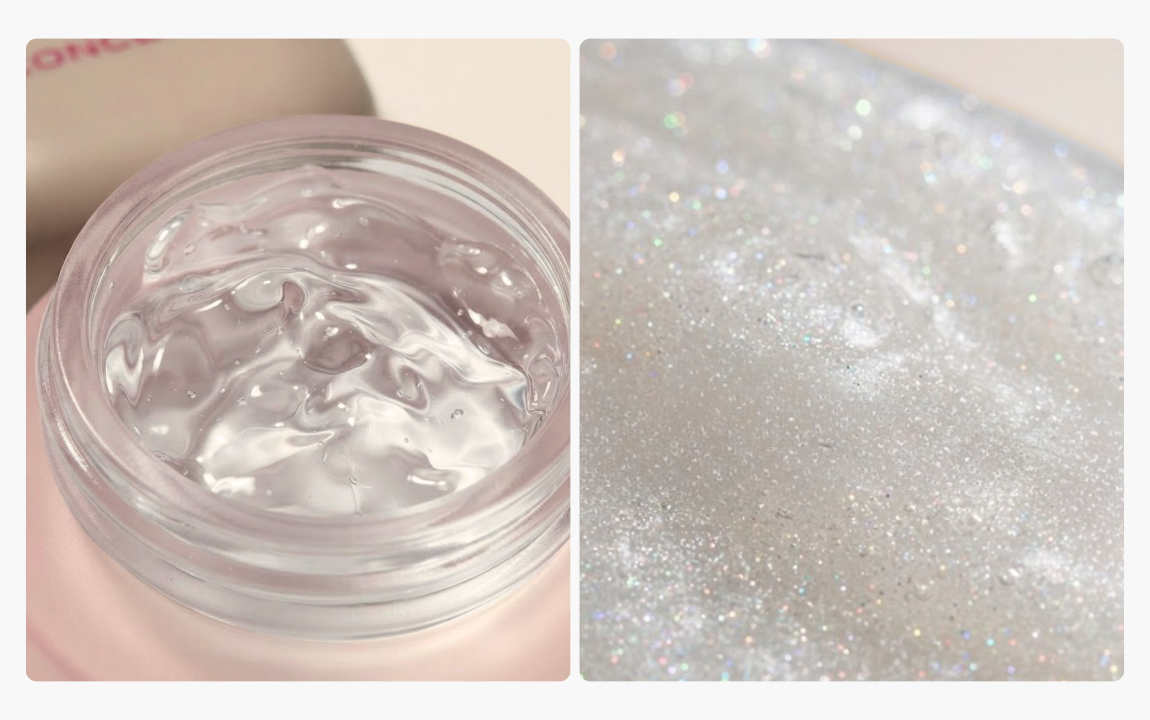
Key texture directions growing in popularity include bouncy jellies, whipped mousses, peel-off mask formats, transformative textures (melting, pearlising or temperature-changing), and shimmer or pearlescent finishes that reward touch as well as sight. Tools and accessories with considered ergonomics or tactile surfaces are also playing a supporting role.
Introducing Concept 4’s Skintertainment Collection
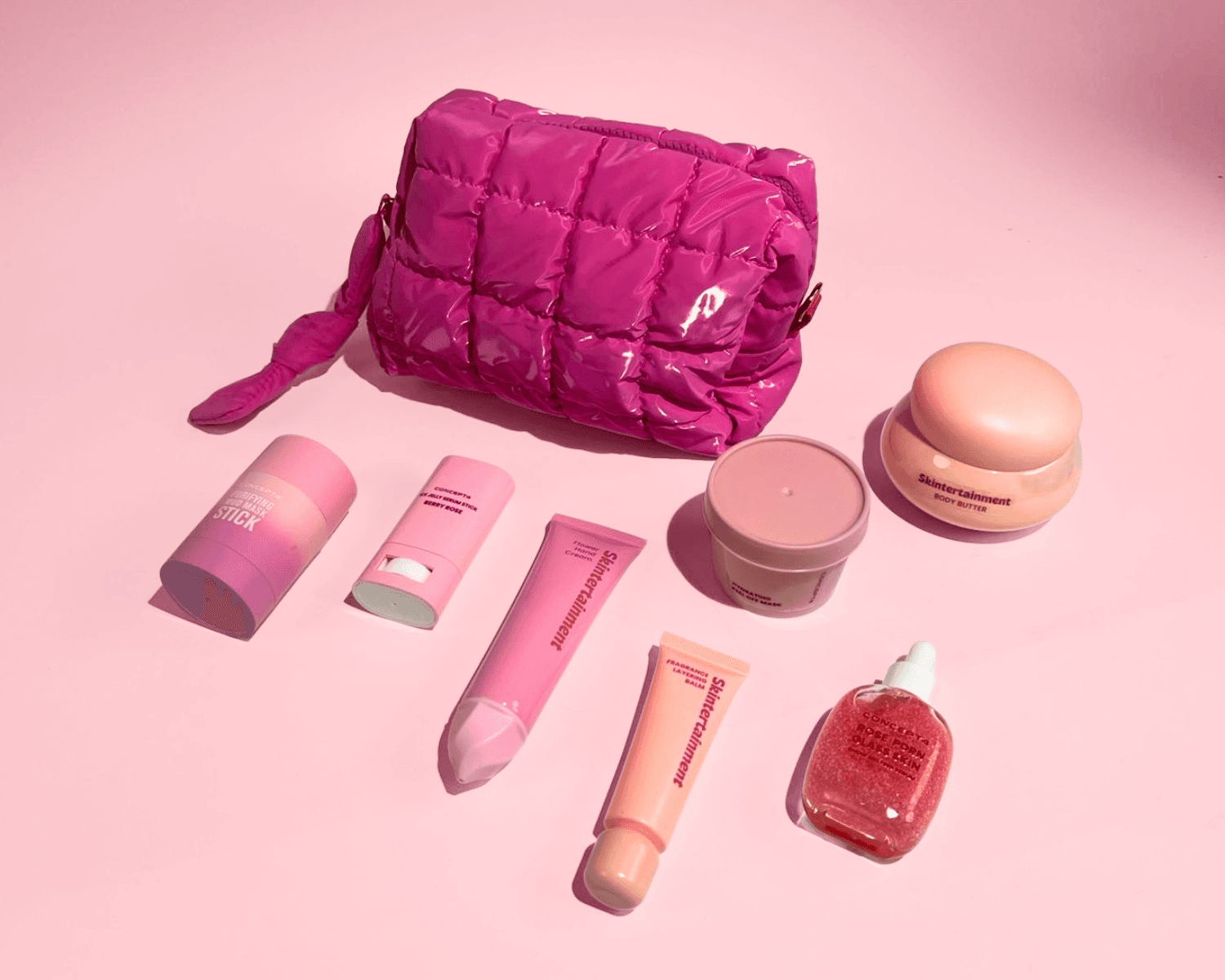
To help brands and retailers explore how these directions can be translated into commercial product, Concept 4 has developed a cross-category collection spanning personal care and beauty accessories. The collection demonstrates practical applications of tactile interaction, transformative textures, and engaging experiential formats.
The collection focuses on three interconnected areas:
Tactile Interaction
Ergonomically considered shapes and surface textures that reward touch; from pebble-shaped body butters and rolling massaging balls to tactile beauty accessories such as furry hair clips and knotted headbands. High-shine quilted pouches with a gloss-like nylon surface further illustrate how packaging and accessories themselves can become part of the sensorial proposition.
.png) Transformative and Luminous Formats
Transformative and Luminous Formats
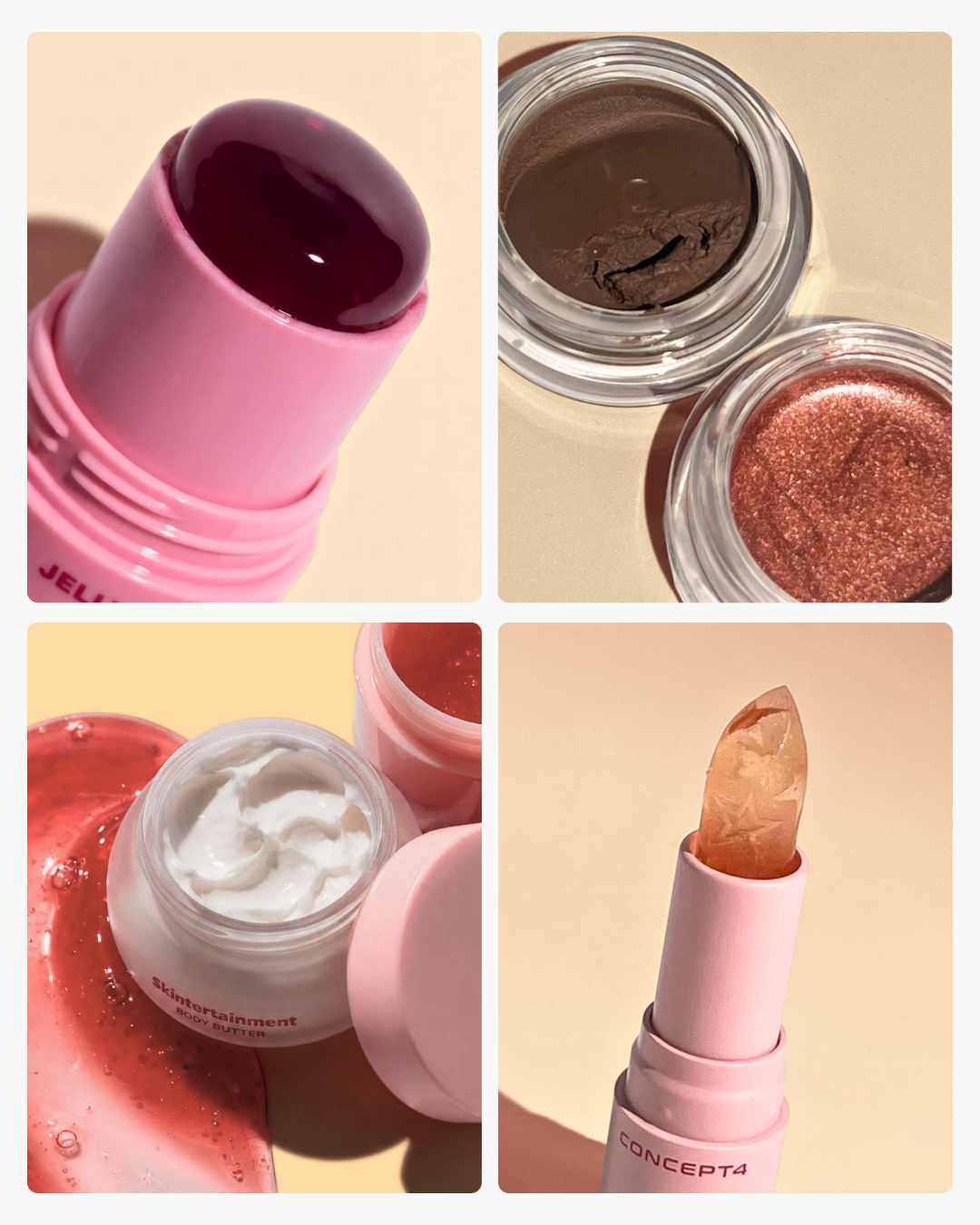
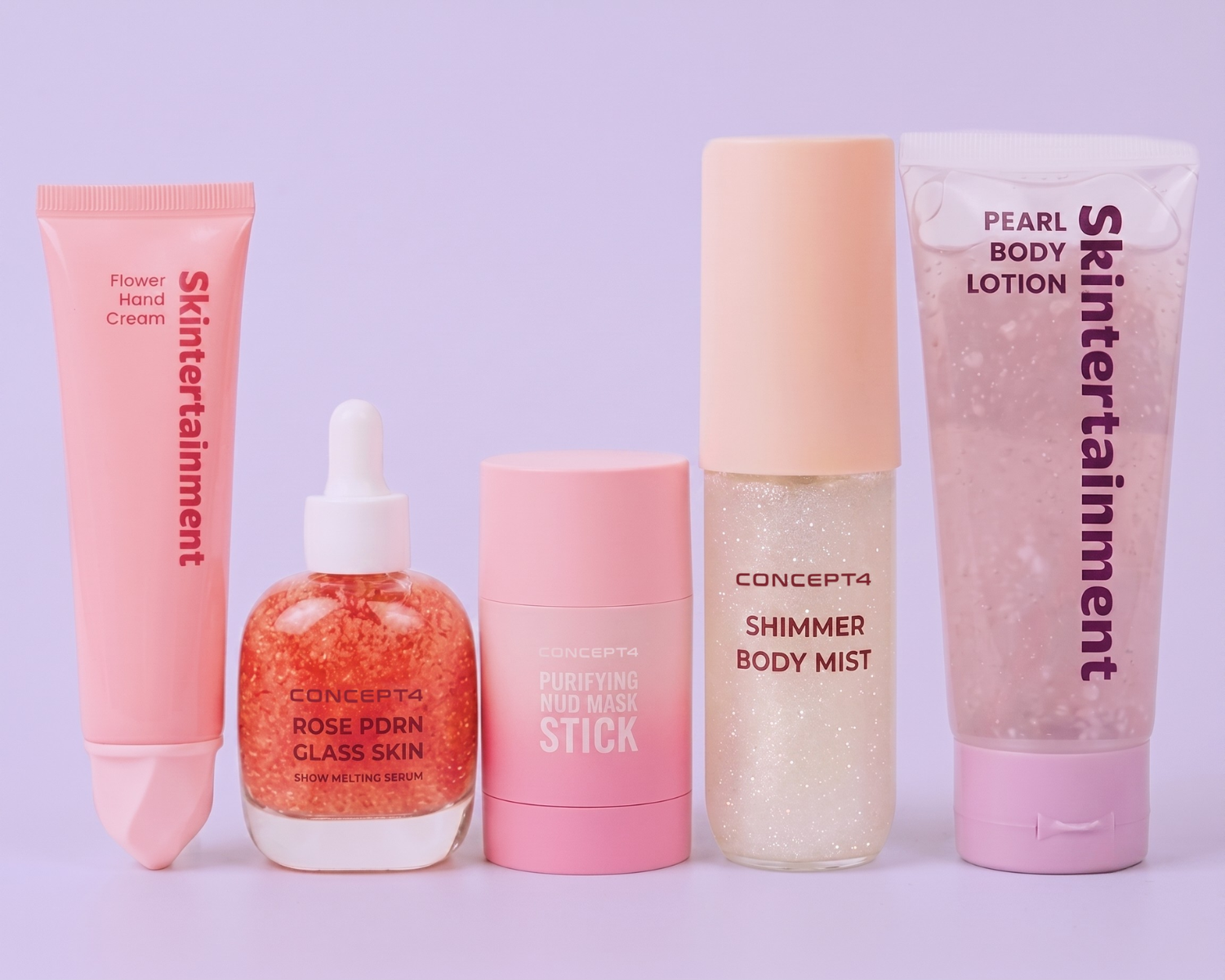
Textures that change on application; from snow-melting serums and pearlised body lotions to shimmer body mists and purifying mud mask sticks. The flower hand cream’s dispensing mechanism extrudes the cream in delicate flower shapes, offering brands a subtle but distinctive way to create small moments of surprise and delight through packaging innovation.
Jelly Textures
Bouncy jelly moisturisers, cooling ice jelly serum sticks and shower jellies deliver hydration with a distinct sensory profile. The Coconut Matcha pearl shower gel also adds a shimmering, textural dimension to the bathing experience. The jelly aesthetic is further extended through translucent jelly-style pouches and mini keychain versions, reinforcing the sensorial theme across packaging and accessories.
 Strategic Considerations for Brands and Retailers
For brands and retailers exploring sensorial directions, several strategic questions may arise:
How can texture and interaction become part of core positioning rather than standalone hero products?
Which categories in the portfolio are best suited to sensorial innovation, and how can these directions be scaled effectively?
How might tactile and interactive formats support both in-store differentiation and social amplification?
Addressing these questions thoughtfully can help brands move beyond incremental product development toward more distinctive and emotionally engaging ranges.
Making Tactile Differentiation Scalable
This is where Concept 4 comes in. We work with with beauty brands and retailers to translate emerging sensorial directions into commercially viable product ranges. Our cross-category approach; spanning formulation, packaging engineering and accessory development, allows clients to explore cohesive concepts tailored to their positioning, target consumer and supply chain requirements.
Whether you are looking to develop a hero texture, build a broader sensorial range, or better understand how these formats fit into your pipeline, Concept 4 can support the process from trend translation through to commercial execution.
Get in touch to discuss how similar sensorial and tactile approaches could be adapted to your brand strategy!