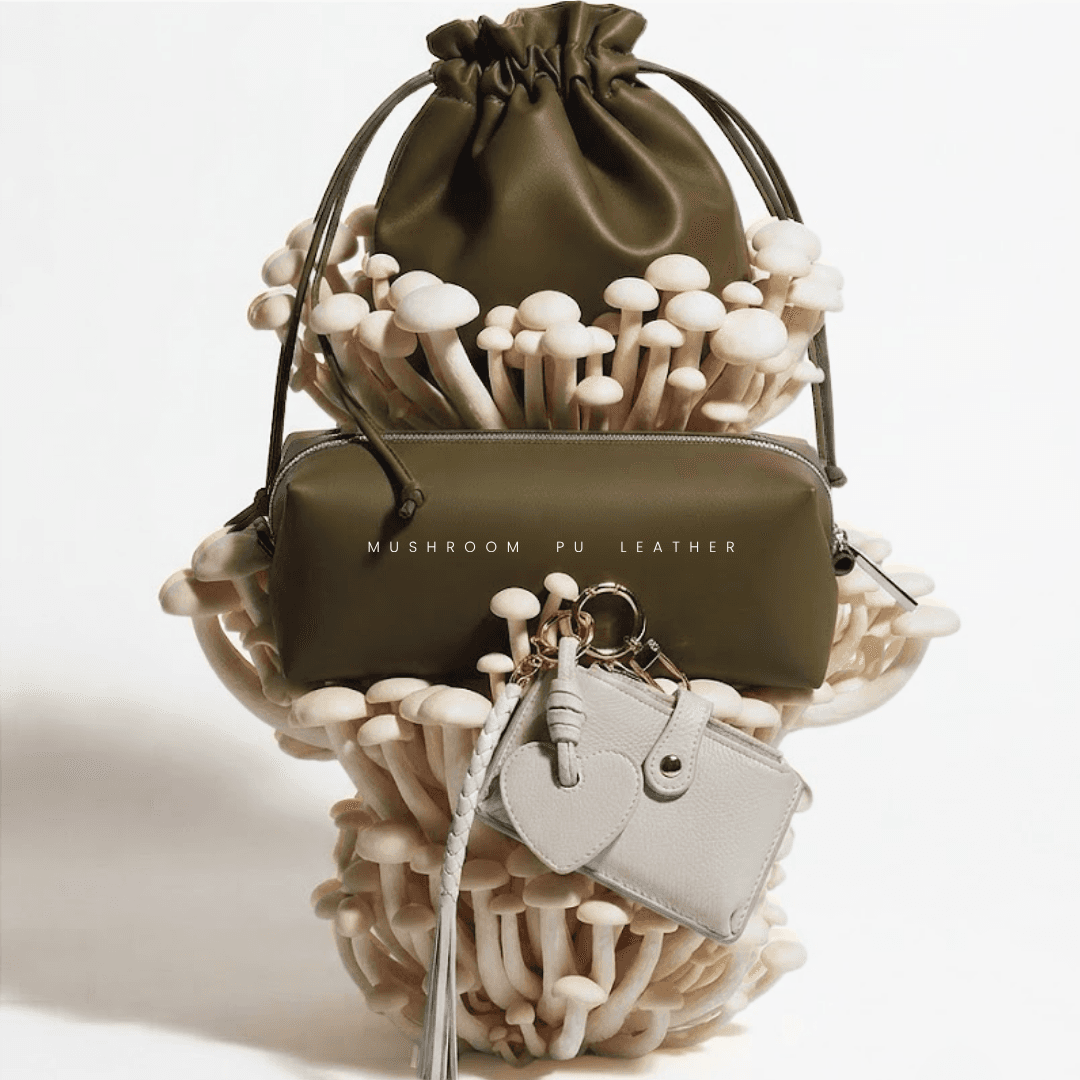
That pressure shows up most on bags, pouches and beauty GWPs. Conventional PU is still used because it is familiar in the factory, easy to colour, and usually cheaper. What it does not give a team is a spec beyond “leather-look PU.”
Those same pieces are also compared with real leather; how they look, and what they cost. In this range, Mushroom PU is priced closer to leather than to basic PU. The difference is the named content: 30% bio-based, formulated from mycelium.
Animal-derived materials are under a more public watch on the runway. PETA disrupted runways in New York and London over wool. While leather was not the target of those actions, but it sits in the same wider brief. Buyers looking for an alternative to animal leather now expect a clearer answer than “leather-look PU.
That is the brief behind this season’s bag and small-goods showing: a leather-look collection developed in 30% bio-based Mushroom PU.

What a range review now asks
Two questions now get asked in the same range review, in part because retailers and regulators are tightening what can be said about materials.
First: does the bag or pouch look right; shape, colour, how it sits on a shelf? This collection is built as leather-look product, and to look finished.
Second: what is the material made of, and can we put a number on it? For this material the number is 30% bio-based PU, formulated from mycelium. That is the composition line to take into the meeting.
What is Mushroom PU?
Mycelium is the root-like structure of fungi and the growing network from which mushrooms develop. It grows by absorbing nutrients from its environment. For this material, that cultivation is done entirely on non-food feedstocks, such as agricultural waste.

The material-impact point is the PU itself. Mushroom PU is 30% bio-based PU, formulated from mycelium. The development aim is to reduce reliance on fossil-derived polyurethane. That is the line to take into a meeting.
Retailers and regulators are tightening language around “vegan leather,” “eco leather” and an unqualified “bio-based.” A numbered composition line is more useful than a label. The impact story for this material is what it is made of.

Why develop your next range with Concept 4
Since 2003 we have designed, sourced, and delivered bags, cosmetic cases, fashion accessories, and GWPs for global beauty and fashion names; from concept to shelf.
As a Certified B Corporation and an EcoVadis-rated partner, we already work to the diligence standard most international brands now require of their suppliers. That means material innovation is not a side project. It is part of the same sustainability work we already do with brands; from eco-design and material choice through to how those choices are documented, while still protecting design quality, compliance and delivery.
If you are mapping materials across a bag or beauty-accessory line, we can help you compare options, estimate product-level impact during development, and turn a material story into a range that can actually be bought, made, and sold.

Want to see a sample?
Request samples of 30% bio-based Mushroom PU in handbags, pouches, wallets and beauty accessories. We will go through the current spec and the composition line with your team. Then you decide what belongs in your the next line!